

Tamron 16-30mm F/2.8 G2: A Season with One Lens
The classic wide angle lens upgraded.

It was barely light yet. I was on my knees in wet heather waiting for the sun to break through a stand of pines at the far edge of the field. When it finally did, the whole sky lit up gold and pink at once, and the Tamron 16-30mm F/2.8 Di III VXD G2 was the only lens in my bag wide enough to capture all of it.
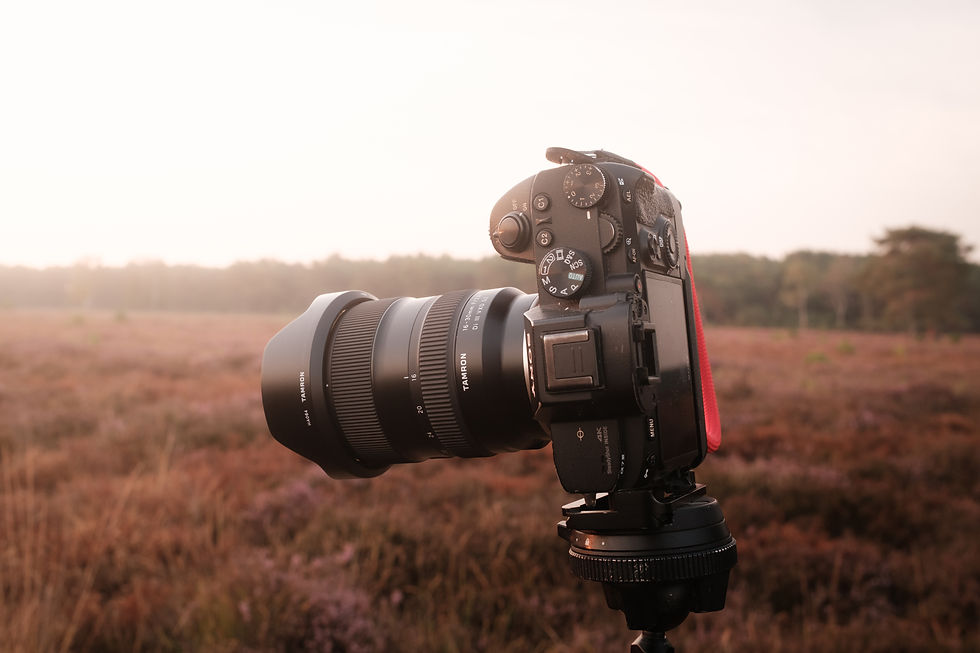
16-30MM F/2.8 · 440G · SONY E · €900 / $899
The number that still surprises me is 440 grams. I've had this lens on a heath before sunrise, on ridge hikes across Madeira, in the dunes of the Netherlands, up in the French Alps, and along an Amsterdam canal, and I stop noticing it's there. Pulling it out of the box a constant f/2.8 zoom this compact felt like it had to be cutting a corner somewhere. A few hundred frames later, I still haven't found it.
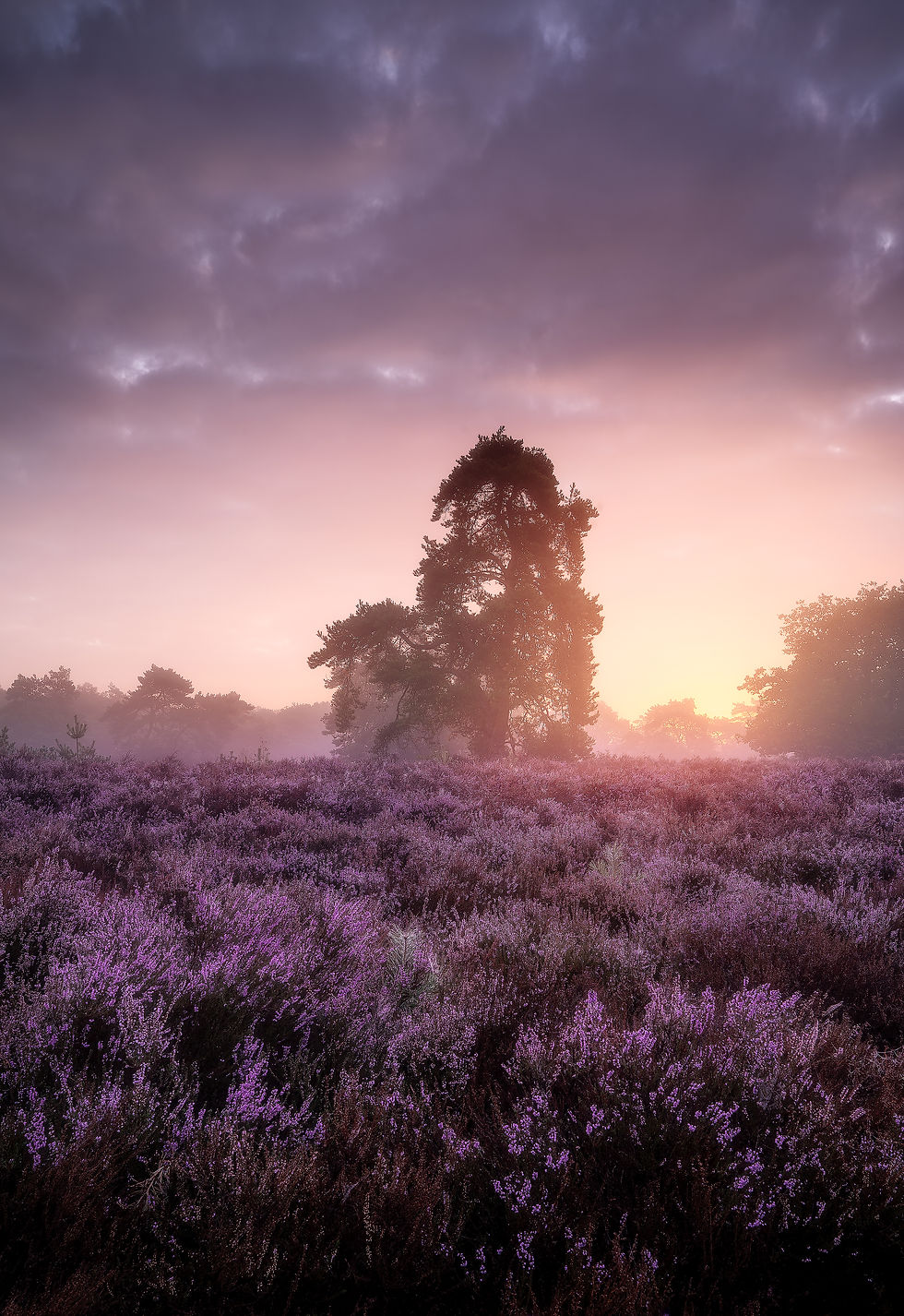
THE HEATH — a heathland at dawn, Netherlands
The fog didn't lift right away. For a while the light was flat and directionless, a good early test of whether this lens holds contrast when there's nothing too dramatic to point it at.

A little later, the sky went a deep pink and gold, and the tree line turned almost black against it. It's insane how fast a landscape can change.

Weeks earlier, under a much emptier sky, the same lens went looking for something else entirely.
THE NIGHT SKY — Schoorl, under the Perseids
The Perseids peaked in mid-August, and I drove out to Schoorl, one of the darkest patches of sky left in the Netherlands, to shoot the Milky Way. I walked towards the old wooden beacon with a headlamp on while I had the shutter open, a small human figure and a point of light under a sky actually full of stars adds a nice scale to the scene.

Shooting the Milky Way at a constant f/2.8 with this little glass is genuinely satisfying. I pulled a 100% crop from both top corners of a second frame and compared them to the center, checking for coma, the winged smears fast wide lenses can leave on stars near the edges. What I found instead were short, roughly equal streaks across the whole frame, pointing to Earth's rotation during the exposure rather than a lens flaw. A real coma test would show round points in the center and winged ones in the corners. That difference isn't there. So I can't tell you definitively how this lens handles coma, only that nothing here points to a problem.

Not every trip with this lens was about testing it. Most of the time, it just came along.
CHAMONIX AND A HOLIDAY, France
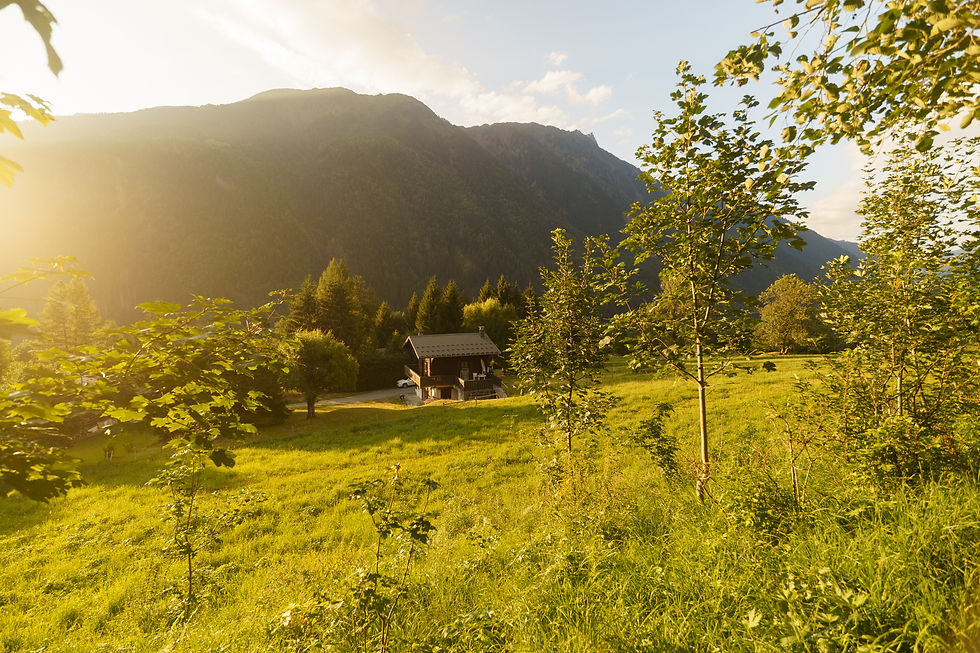
Back in the Alps, I wasn't shooting with any real plan, the lens just came along. Looking back at that trip, I never once zoomed past 16mm. Everything from Chamonix sits at the widest end, doing whatever the moment in front of me needed instead of one specific job.
That range covers more than open landscapes. An elderly couple sat on a bench in front of a small wooden chapel with the Aiguilles rising behind it, and 16mm was wide enough to hold bench, chapel, and peaks in one frame without me backing into the road behind me.

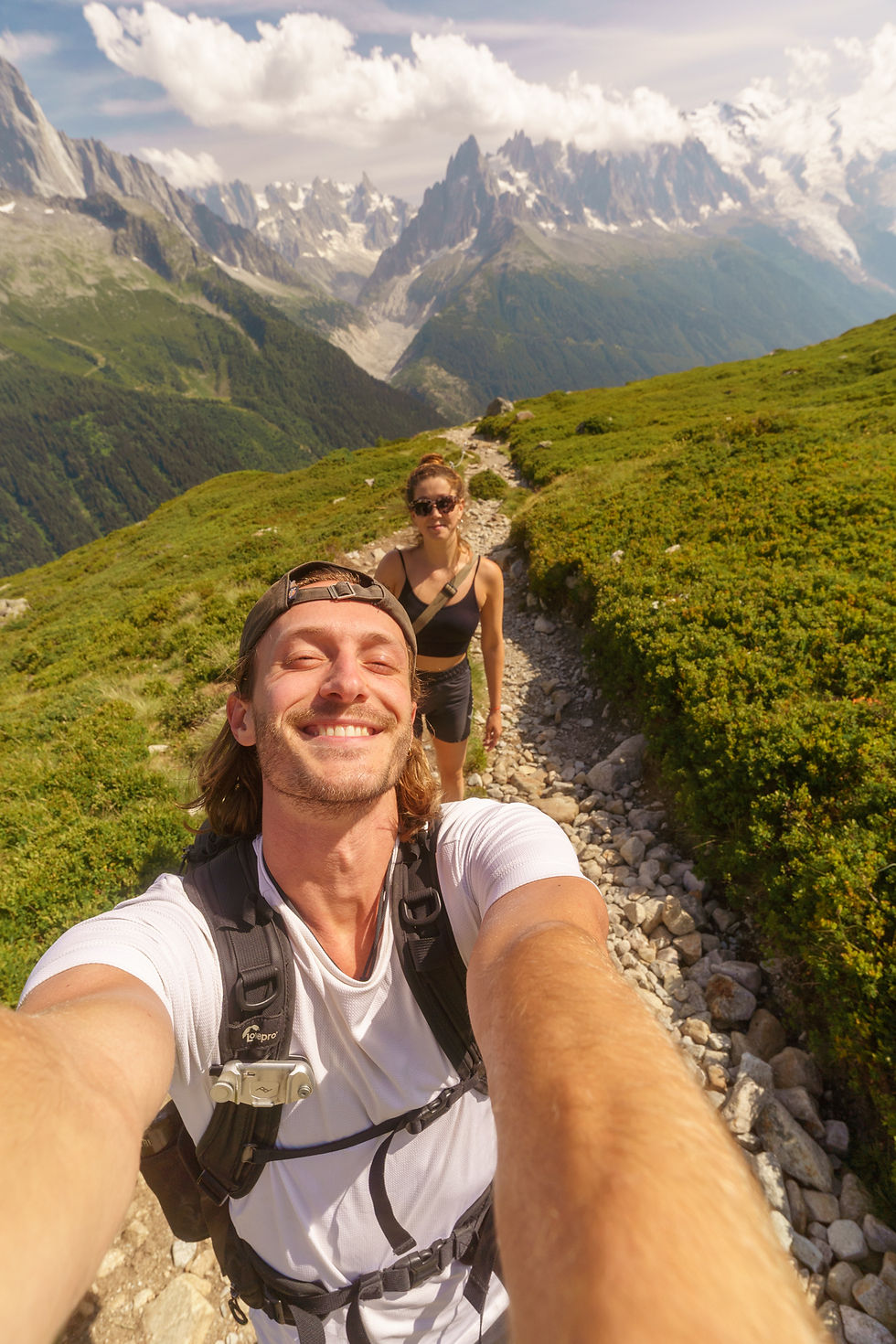
It's wide enough to double as a selfie lens too, which was pretty funny. Not what I bought this glass for, but it's the kind of shot a genuinely wide, genuinely sharp lens makes easy.
Later, at a small alpine lake, I switched to black and white and let a near-perfect reflection do the work, rock and cloud mirrored in flat water. Corner sharpness held out to the rocks at the very edge of the frame, which is exactly where a weaker ultra-wide starts to soften.

THE WATERFALL — Caldeirão Verde, Madeira
On a trip to Madeira, deep inland at a waterfall called Caldeirão Verde, I stopped down to f/16 and let the water go soft while the rock face stayed sharp edge to edge. It's the kind of shot where weak corners get found out fast, detail everywhere, nowhere to hide. Nothing here needed fixing in post.

THE FOREST — Fanal, Madeira
On a foggy afternoon in Madeira's ancient laurel forest, the light dropped to almost nothing under the canopy and the fog turned every tree into its own silhouette. I stopped down to f/8 to hold detail in the moss and bark of one gnarled old trunk without losing the softness of the fog behind it. A different kind of test than the waterfall, less about fine detail and more about whether the lens holds contrast in flat, hazy light. It held it.

THE CITY — Amsterdam, Netherlands
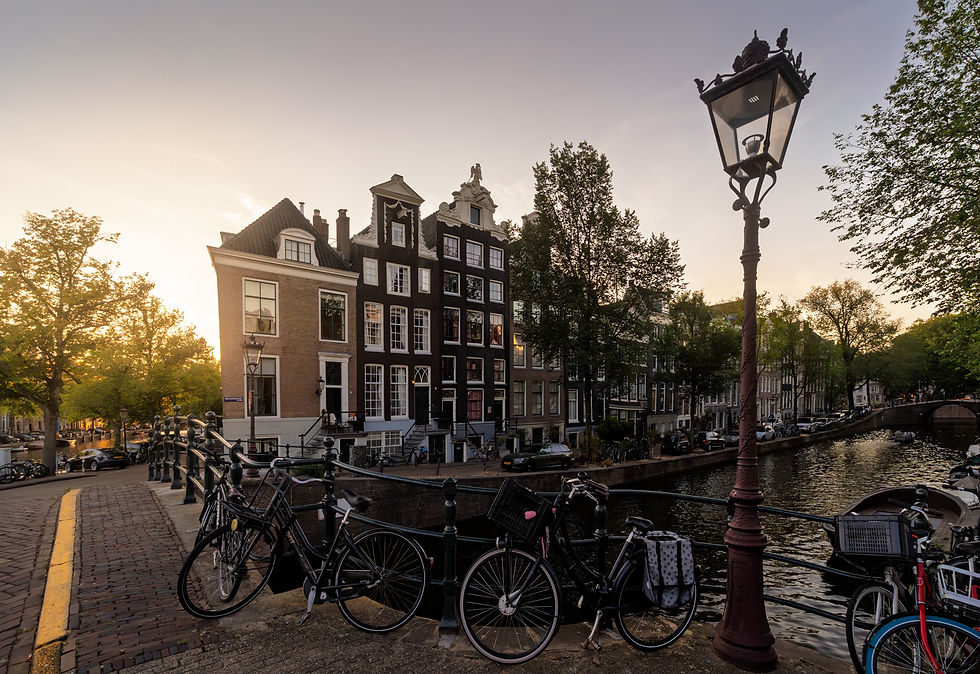
Landscapes and mountains are the obvious use case for a lens like this, so I took it into central Amsterdam on a summer evening to see how it handled the opposite: straight lines, brick facades, a canal full of reflections. Shot from a bridge at 16mm, the gabled housefronts stayed upright and rectilinear right into the corners. Nothing here needed a lens-correction profile in post.
THE CLIFFS — Pico do Areeiro to Pico Ruivo, Madeira
Back on Madeira, this ridge trail is where I first pushed the lens toward its edges, literally. Shooting at 17mm with the peaks stacked into the frame, I went looking afterward for the barrel distortion and soft corners other reviewers noticed in this range. I couldn't find them.

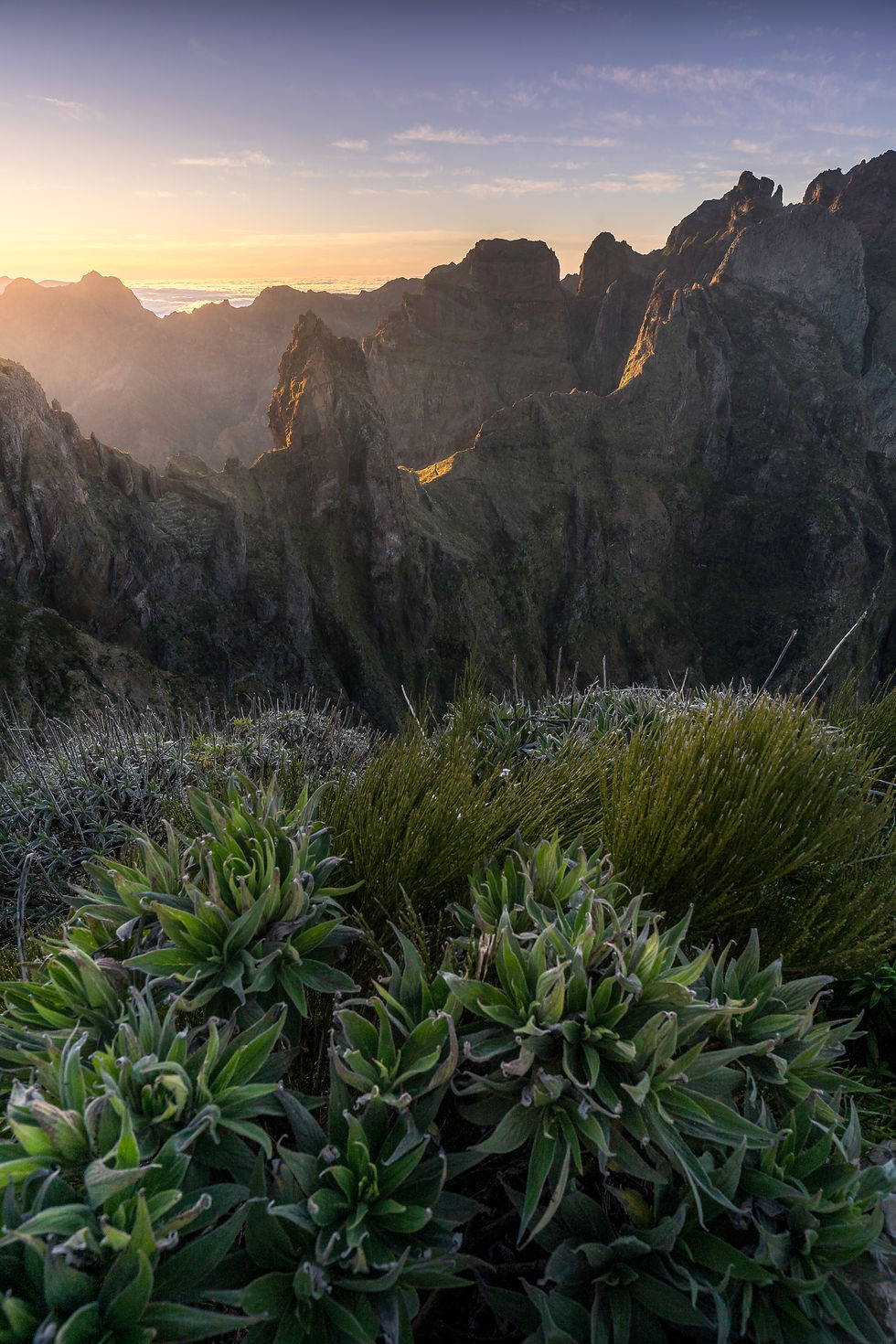
That same evening also gave me the trail's widest view, the stone path narrowing between the peaks in receding layers, and a reason to run the lens out to 30mm for once. Most of what I shot here stayed at 16 or 17mm, wide enough to swallow the whole ridge in one frame, but stepping in to 30mm to compress the peaks and pick out the sea of clouds pooling at the horizon is the first time in this review the long end of the zoom did something the wide end couldn't.

The first time in this review the long end of the zoom did something the wide end couldn't.
THE VALLEY — Curral das Freiras, Madeira
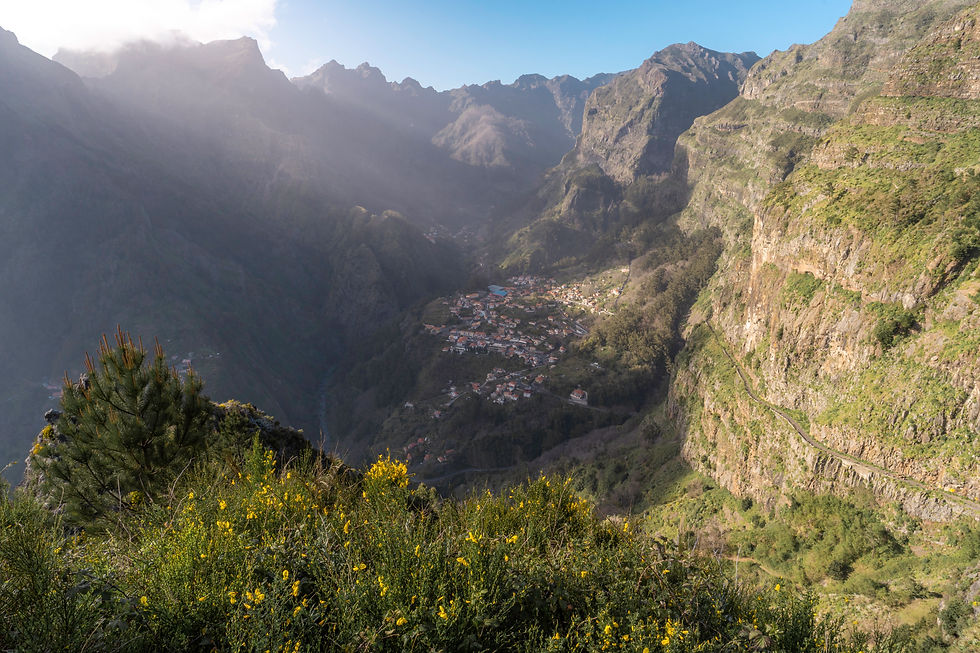
At a viewpoint above this valley on the same trip, houses tucked at the bottom and a wall of broom in bloom right at the lens, I tested 20mm with a strong foreground element close to the frame edge, usually where distortion shows itself first on an ultra-wide. It's there if you go looking with a grid overlay, mild barrel at 16mm drifting toward pincushion past 20mm, a one-slider fix. Reviewers also flag softening between 22 and 30mm unless you stop down. I believe the pixel-peeping. Across everything I actually shot, real photographs meant to be printed and shared, I never ran into a frame that made me think about either.
WHERE IT SHOWS ITS LIMITS
Flare is the one place this lens gave me more trouble than expected, more than the mild CA or the barely-there distortion. Shooting into low sun on Madeira produced stubborn veiling flare, more effort to fix in post than the chromatic aberration sitting in the same frame, which corrected in seconds. Stop down toward f/16 with the sun at the frame's edge, though, and the same lens throws a clean, pointed sunstar. There's no aperture ring, which won't register for most people but will bother anyone used to having one, and the front element moves in and out as you zoom, so I'm a little more careful about dust and sand than with a sealed, internal-zoom design. Autofocus, for what it's worth, never once made me wait, the VXD motor is fast and near-silent, though most of my night work here was manual focus anyway. I was shooting a demo copy, so I can't promise every unit behaves identically, but nothing here suggested a flaw specific to this one.
VERDICT
If you shoot landscapes, architecture, or the night sky and want a wide, fast lens that disappears in your bag, this is an easy recommendation. It's roughly half the price of Sony's own 16-35mm GM II, and the corner performance and distortion control here are close enough that the price gap is hard to justify unless you specifically need Sony's glass. Against Sigma's 16-28mm it's a similar story from the other direction, bigger, heavier, a touch more barrel distortion, and whatever small optical edge it has on paper didn't feel worth the weight on a trail.
Would I take it again? Without hesitation, and not just to one place. For paid work I'd still bring it, but I'd budget a little more time in post for flare-heavy scenes than I would with a lens that handles backlight more gracefully. That's a fair trade for what you get everywhere else in the frame.
FAQ
Is the Tamron 16-30mm F/2.8 G2 sharp? Yes, into the corners at 16mm wide open. Some softening shows up between roughly 22 and 30mm on test charts, but I never noticed it in real-world shooting.
Does it have image stabilization? No, it relies on your camera body's IBIS, which was never an issue for handheld landscape work on a Sony A7 III.
What filter size does it use? 67mm on the front thread.
Is it good for astrophotography? Yes. Constant f/2.8 at 16mm is genuinely useful for Milky Way shots, and nothing in my night shooting pointed to a coma problem, though I'd want a cleaner test than mine to say that with full confidence.
How does it compare to the Sony 16-35mm GM II? Roughly half the price, with performance close enough that most people won't miss the difference.
How does it compare to the Sigma 16-28mm? Noticeably lighter, less barrel distortion at the wide end. The Sigma has a small edge on paper, but it wasn't worth the extra weight in the field.


Comments